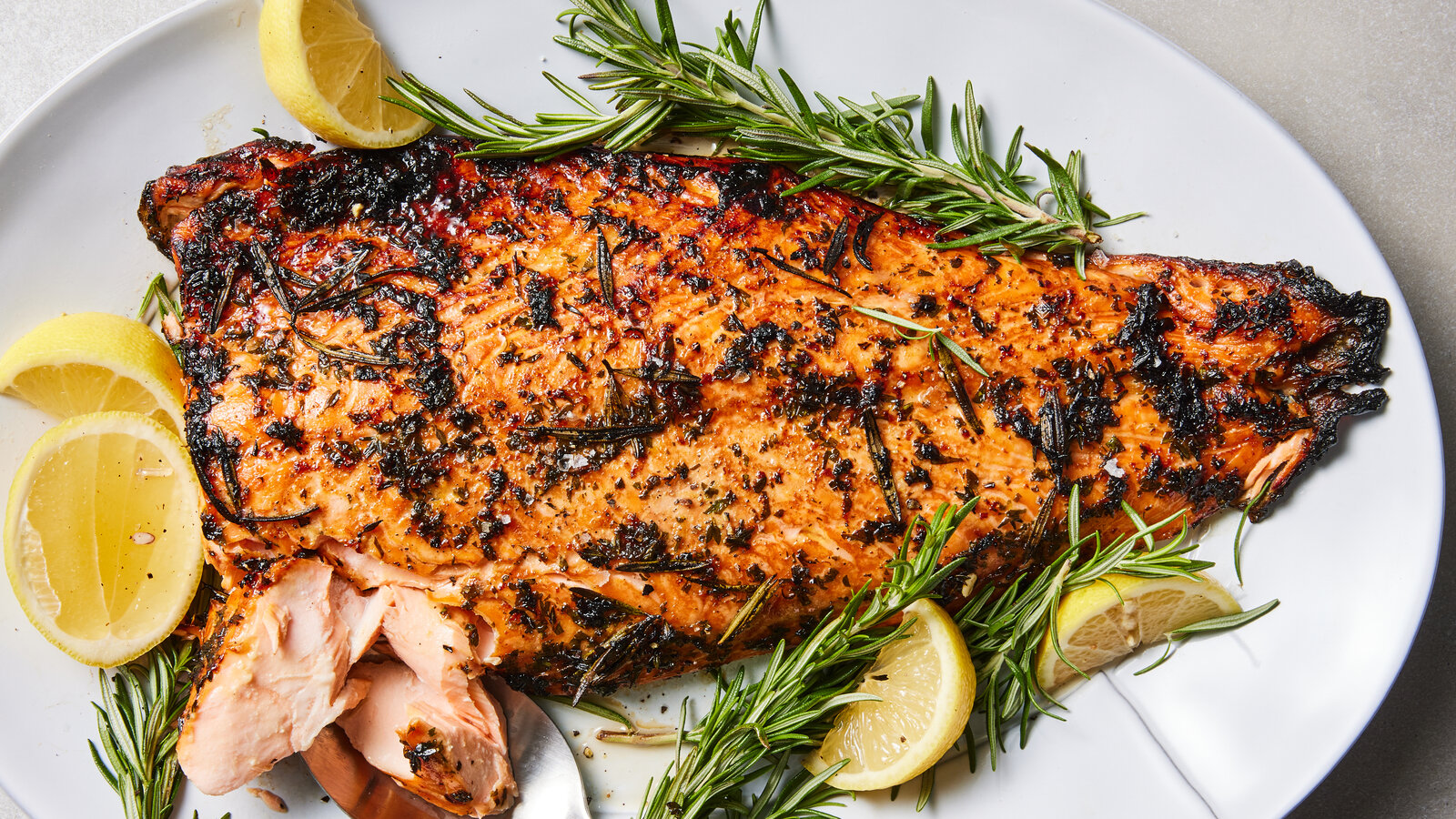
Crispy skinned salmon pan seared over a bed of chewy wheat berries with a bright lemon and herb finish. Twenty minutes of cooking, ten thousand years of ingredients.
Salmon and grains is one of those combinations that reads simple on paper and lands complete on the plate. The grain gives you texture and substance. The salmon gives you fat, richness, and the kind of umami that only comes from fish cooked skin side down in a very hot pan. Together they make a meal that feels restaurant plated with almost no effort.
Wheat berries are the foundation here. They are just wheat in its whole unprocessed form, bran and germ and all. Farmers in the Fertile Crescent were eating them ten thousand years ago, long before pasta or bread were invented. The intact bran is why they stay chewy for days in the fridge and why they soak up pan sauce without turning to mush.
The salmon side of this dish rewards a little science. Salmon skin is mostly collagen, and under it lies a layer of subcutaneous fat. When you put room temperature salmon, skin side down, onto a pan that has been heating for a full three minutes before the fish goes in, two things happen in sequence. First, the heat shocks the skin into contracting, which is why home cooks often press their salmon down for the first thirty seconds to keep it flat. Second, the fat under the skin renders into the pan, and the surface tension of that released fat lifts the skin off the metal and starts crisping it. If the pan is not hot enough at the moment the fish hits it, the skin bonds to the metal instead of releasing, and you tear it when you try to flip. If the pan is hot enough, the fish releases itself when the skin is crisp. You will feel the fish stop resisting the spatula. That is the signal.
The lemon zest at the end is not a garnish. Citrus peel contains a volatile oil called limonene, which is the compound responsible for most of the bright smell you get when you cut open a lemon. Limonene evaporates at warm temperatures, which means if you add zest during the cook, most of the aroma is gone by the time you plate. Added off the heat at the last second, the zest delivers its full aromatic load directly to your nose as you take the first bite. This is the same reason why I tell people to never cook lemon zest into anything. Finish it. Always finish it. Every professional kitchen I ever worked in treated citrus zest as a garnish step, not a cooking step.
I eat this most often on Tuesday or Wednesday nights when I have cold wheat berries from Sunday's prep in the fridge. It takes fifteen minutes and my boys will eat the whole skin because crispy fish skin is one of the best textures in cooking. I reheat the berries with a splash of stock and some olive oil, sear the salmon while they warm, and the plate comes together in the same amount of time it takes to set the table.
What Makes This Dish Work
Dry the salmon skin aggressively. Pat the skin dry, then let the fish sit on a paper towel for a full five minutes uncovered. The drier the skin at the moment it hits the pan, the crispier the end result. Water on the skin creates steam, and steam is the enemy of crispness.
Do not flip until it releases. Four to five minutes skin side down in a screaming hot pan. Do not peek. Do not press. Do not stir. When the fish is ready to flip, the skin will release itself from the pan when you slide a thin spatula under it. If it is still sticking, wait another thirty seconds.
Finish in the pan, briefly. Flip the fish for just two minutes on the flesh side. Salmon is done when the center reads 125°F for medium or 130°F for medium well. Anywhere past 140°F and the fat starts rendering out of the flesh and the texture turns chalky. The fish will continue cooking from residual heat while it rests on the plate.
Reheat the wheat berries with fat. Cold grain reheated in dry heat goes rubbery. Add a tablespoon of olive oil or butter to the pan before the wheat berries go in. The fat coats each grain and keeps them soft while they warm. A splash of stock or pan drippings finishes the reheat.
How to Serve It
Pile the wheat berries across a wide plate, lay the salmon skin side up in the middle, and finish with parsley, lemon zest, and a generous drizzle of olive oil. A few shavings of parmesan on the grain works if you want to push it further.
This pairs beautifully with Charred Lemon Broccolini or a simple green salad with lemon vinaigrette. For something more substantial, serve with Mediterranean Cucumber and Olive Salad on the side.
Frequently Asked Questions
Can I use skinless salmon?
You can, but you give up the best part. The crispy skin is where a lot of the flavor concentration happens. If you use skinless, sear it in a very hot pan just the same, but only for about two to three minutes per side because there is less thermal buffer.
What if I do not have wheat berries?
Farro is the closest substitute (about 25 minutes to cook). Barley works as well. In a pinch, quinoa or brown rice will hold up, though the texture is softer and the dish plays differently. Any whole grain that holds its shape works.
Can I make the salmon ahead?
Salmon is best served immediately. If you have to prep ahead, cook the salmon to just under done, cool it fully, and then warm it briefly under a broiler or in a low oven to bring back some crispness on the skin. Never microwave cooked salmon.
What kind of salmon should I buy?
Wild caught Pacific salmon (king, coho, or sockeye) has the best flavor and firmest texture. Farmed Atlantic salmon is cheaper and has a softer texture. Either works in this recipe. Wild salmon is done at a lower temperature (around 120°F) because it has less fat.

Pan Seared Salmon over Wheat Berries with Lemon and Herbs
Ingredients
Method
- Dry the salmon skin thoroughly with paper towels. Season both sides with salt and pepper.
- Warm the wheat berries. In a small saucepan, heat the olive oil over medium heat. Add the cooked wheat berries, a splash of stock, and a pinch of salt. Stir until warmed through, about 3 to 4 minutes. Keep warm.
- Heat a large skillet over medium high heat with olive oil. When the oil is shimmering and just starting to smoke, add the salmon skin side down. Do not move the fish.
- Cook skin side down for 4 to 5 minutes until the skin is deeply crisp and the flesh is opaque about two thirds up the side of the fillet.
- Flip the salmon. Add the butter and sliced garlic to the pan. Cook for another 2 minutes for medium, basting with the melted butter. Remove from heat.
- Plate. Spoon the wheat berries onto each plate. Lay the salmon skin side up on top. Finish with lemon zest, lemon juice, parsley, dill, and flaky sea salt. Serve immediately.
Notes
Did you make this? I want to see it. Tag @saltandstock on Instagram.
Leave a Reply