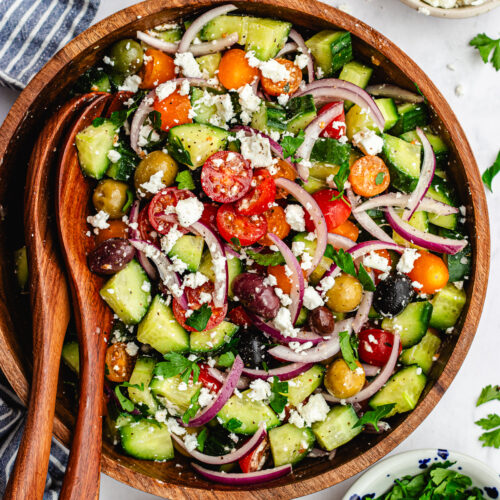
Cucumbers, cherry tomatoes, red onion, olives, feta, and fresh herbs tossed in a bright red wine and lemon dressing. No cooking. Five minutes of knife work. Endlessly satisfying.
Some dishes are less about cooking and more about assembly, and that is not a lesser thing. A salad like this depends on freshness, sharpness, brine, and balance. Crisp cucumbers. Tomatoes. Red onion. Olives. Herbs. Feta. Good olive oil. That is all it takes.
This kind of salad belongs to hot days, outdoor tables, and meals where bread is always within reach. It feels like the kind of dish that appears casually and disappears quickly. There is no need to overwork it. Its strength is in the clarity of the ingredients.
Cucumbers have been cultivated for at least four thousand years. They originated in India, spread west through Persia, and hit the Mediterranean by Greek and Roman times. The Roman emperor Tiberius reportedly had cucumbers grown year round in wheeled carts that could be moved into the sun, one of the earliest recorded examples of greenhouse agriculture. In Numbers 11:5, the Israelites in the wilderness longed for the cucumbers, melons, leeks, onions, and garlic they had eaten in Egypt, which puts this vegetable firmly in the daily food language of the ancient Near East. When you slice a cucumber for dinner tonight, you are using a plant that has been on human tables through every empire since Babylon.
Feta has a more specific geography than most people realize. Since 2002, feta has been a Protected Designation of Origin product in the European Union, which means it can only legally be called feta if it is made in specific regions of Greece (and parts of Thrace) from sheep milk or a mix of sheep and goat milk. Any white brined cheese made outside those regions has to be called something else, like “Greek style cheese” or “brined white cheese.” Real feta is tangier, drier, and more mineral than the cow milk versions you sometimes see in American grocery stores. It holds its shape in a salad instead of dissolving. Greek oregano is also a different species from Italian oregano, called rigani. It is floral, almost citrusy, and more intense than the dried oregano most Americans think of. If you can find it, use it here. It makes a visible difference in the dressing.
The technique move most home cooks skip: let it sit. When the dressing hits the salted vegetables, osmotic pressure pulls some of the water out of the cucumbers and tomatoes. That water mixes with the dressing to create a light tomato-cucumber vinaigrette in the bowl, which then gets absorbed back into the cheese and the herbs. The process takes ten to fifteen minutes at room temperature. Skip it and the salad tastes like separate ingredients sitting next to each other. Let it rest and the dish becomes an actual composed flavor. Every Greek yiayia knows this instinctively. Every American home cook needs to be told.
Olives and olive oil are as biblical as ingredients come. Cucumbers and herbs have long been part of everyday tables across the eastern Mediterranean and surrounding regions. This is not ceremonial food. It is daily food. It is food for sharing. Food that says there is enough for everyone if we keep things simple and generous. I make a big bowl on Sundays and eat it through Wednesday. The flavors only get better.
What Makes This Salad Work
Use a mix of olives. Kalamatas bring wine-like depth. Green olives bring sharp brine. A mix of Castelvetrano and oil cured olives adds buttery richness. Whatever combination you build, keep the total volume the same and avoid any one olive dominating the bowl.
Slice the red onion paper thin. Thick red onion is overwhelming. Paper thin slices soak in the vinegar and become mild, almost pickled, within five minutes of being in the dressing. A mandoline works, but a sharp chef knife and patience does the same job.
Crumble the feta in rough chunks, not shreds. You want pieces large enough that you get a real feta bite when one lands on your fork. Shredded feta disappears into the salad and you lose the contrast. Break it with your fingers directly over the bowl.
Let it sit. I said it above and I will say it again. Ten minutes of rest before serving is not optional. This is the difference between a good cucumber salad and a great one.
How to Serve It
This is the side dish that goes with everything. Alongside grilled lamb or chicken, next to a pile of Slow Roasted Beef Chuck, or as part of a Mediterranean spread with warm pita, hummus, and olives. It also works on its own as a light lunch with a hunk of bread and a glass of cold wine.
For a composed plate, spoon the salad onto a wide platter, drizzle the remaining dressing around the edges, and add a handful of torn mint leaves on top. It photographs beautifully and reads as the centerpiece it actually is.
Frequently Asked Questions
What kind of cucumbers work best?
English or Persian cucumbers. They have thinner skins, fewer seeds, and stay crisper in the dressing. If you only have regular slicing cucumbers, peel them and scoop out the seeds with a spoon before chopping.
Can I make this ahead?
Yes, but dress it no more than a few hours before serving. The cucumbers release water over time and can dilute the dressing by day two. For meal prep, chop the vegetables and store them dry, then dress at the moment of serving.
Do I really need the mint?
Not strictly. The salad works with just parsley. But mint adds a cooling, bright top note that is classic to this kind of Greek and Levantine salad. Use it if you can.
Can I use white wine vinegar instead of red wine vinegar?
Yes. White wine vinegar is slightly milder. The salad will be a bit less tangy but still delicious. Apple cider vinegar also works in a pinch.

Mediterranean Cucumber and Olive Salad
Ingredients
Method
- Combine the salad ingredients in a large bowl: cucumbers, tomatoes, red onion, olives, feta, parsley, and mint if using.
- Whisk the dressing by combining olive oil, red wine vinegar, lemon juice, oregano, salt, and pepper.
- Pour the dressing over the salad and toss gently.
- Let it sit for 10 minutes before serving so the flavors settle in. Serve at room temperature.
Notes
Did you make this? I want to see it. Tag @saltandstock on Instagram.
Leave a Reply