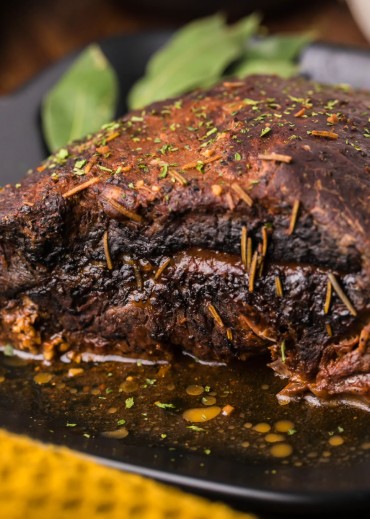
A three to four pound beef chuck roast, rubbed with rosemary, garlic, and smoked paprika, braised low and slow until it falls apart under a fork. A Sunday roast that tastes like the whole day.
This is the kind of dish that feels like it belongs to Sunday. A roast that takes time, fills the house with its scent, and asks nothing from you except patience. Rosemary and garlic do not need much introduction. Together, they are one of the great old combinations for beef. Earthy, aromatic, sturdy, familiar.
Beef chuck is not the glamorous cut, and that is part of why it is so good. It rewards slow cooking. It softens in stages. It gives you something rich and tender if you let it take its time. That kind of cooking feels important now because it pushes back against hurry. You cannot rush a roast and still get the same result.
Here is what is actually happening inside the roast. Chuck comes from the shoulder of the cow, specifically the region between the neck and the fifth rib. This is muscle that works constantly during the animal's life, which means it is rich in connective tissue. Connective tissue is mostly collagen, a triple helix protein that is structurally tough but chemically unstable above 160°F. When you hold a chuck roast at 300°F for four hours, water molecules slowly pry the collagen helixes apart and convert them into gelatin. That gelatin is what turns the roast from chewy to spoon tender, and it is what coats your mouth when you take a bite. It is the same chemistry that makes bone broth gel in the fridge. You are literally converting structural protein into something silk on the palate.
The Sunday roast is one of those traditions that lasts because it was built around a practical need. In Britain before home ovens became common, villagers would take their weekly cut of beef to the baker on Sunday morning. The baker's oven was already hot from the day's bread and retained useful heat until around three in the afternoon, which gave each family exactly enough time to walk to church, listen to the sermon, and walk home to find their roast done. The Yorkshire pudding tradition developed because the drippings from the roast could be used to batter a cheap flour side dish cooked underneath the meat. Working class Britain, solving dinner. The temperature I specify here, 300°F, is not arbitrary. Below 260°F the collagen conversion is too slow. Above 325°F you start evaporating the meat's internal moisture faster than the collagen breaks down, and you end up with a dry roast. Three hundred degrees is the sweet spot. Patient enough to dissolve the collagen, hot enough to finish in an afternoon.
Rosemary is not on this plate by accident. The herb contains two compounds, carnosol and rosmarinic acid, that are actually fat soluble antioxidants. When you rub rosemary over a fatty cut like chuck and slow cook it in its own drippings, those compounds infuse into the rendering fat over hours. You end up with a roast that has rosemary flavor all the way through the meat, not just on the surface. Garlic does the same thing in parallel. The minced garlic on the rub surface caramelizes and flavors the crust, while the whole cloves dropped into the pan slow roast inside their skins, softening into something sweet and spreadable that you can squeeze directly onto bread or stirring into the pan juices. Nothing gets wasted.
There is also something deeply traditional about a shared roast. Across households and generations, a large cut of meat has often marked gathering, rest, celebration, or the simple desire to feed people well. A meal like this says stay a while. Cut another slice. Pass the bread. Spoon the juices. I buy my beef chuck from a half cow I get from a local farm every year, which is a whole separate story you can read in Why I Buy a Half Cow Every Year. Local, grass fed, whole animal sourcing is one of the things I care most about in my kitchen.
What Makes This Roast Special
Dry the meat before the rub. Pat the chuck dry with paper towels. Water on the surface prevents the dry rub from adhering and slows the initial browning. Thirty seconds of drying time is the difference between a crust that sticks and a crust that slides off during carving.
Do not sear first. Traditional recipes call for searing the roast in a hot pan before the oven. For a four hour braise at 300°F, skip it. The long oven time with a covered Dutch oven gives you Maillard browning across the entire exposed surface of the roast during the last hour, especially if you uncover for the final thirty minutes. Searing first costs you more fat splatter cleanup than it gains in flavor.
Pour stock around the roast, not over it. The dry rub needs to stay dry on top to form a crust. Stock in the bottom of the pan creates steam that keeps the meat moist and slowly braises the fibers closest to the bottom. Over the top, it rinses the rub off and washes away the compounds you want to concentrate.
Rest it. Actually rest it. A four hour roast at 300°F needs at least fifteen minutes of rest before slicing. The muscle fibers have relaxed into a state where they are holding their moisture loosely. Cut immediately and you lose most of that moisture to the board. Fifteen minutes of resting lets the proteins reabsorb the water and redistribute the juices. This is not a suggestion. It is the single biggest mistake people make with expensive meat.
How to Serve It
Serve the roast in thick slices with the pan juices spooned generously over the top. A side of Roasted Root Vegetables or Charred Lemon Broccolini rounds the plate. Torn sourdough or mashed potatoes to soak up the juices is the closing move.
For leftovers, shred the meat into the pan juices and use it as the base for my Beef and Olive Stew, or layer it into sandwiches with sharp pickles, arugula, and horseradish mayo. Cold sliced roast on sourdough is one of the best lunches I know.
Frequently Asked Questions
Can I use a different cut of beef?
Yes. Brisket, bottom round, and short rib all work with this technique. Each cut has a slightly different fat distribution, so cooking times vary. Chuck is the most forgiving and the richest in collagen, which is why I recommend it.
Can I cook this in a slow cooker?
Yes. Skip the oven and use a slow cooker on low for 8 to 10 hours, or high for 5 to 6. The crust will be less pronounced because slow cookers trap moisture, but you can crisp the roast under the broiler for three minutes before serving.
What if my roast is not fork tender at the end?
Put it back in the oven, covered, for another 30 to 45 minutes. Chuck roast has a range of collagen content depending on the animal, the cut, and how it was aged. Some take four hours, some take five. Fork tenderness is the test, not the timer.
Can I freeze the leftovers?
Absolutely. Shred the meat and store it in the pan juices in sealed containers. It freezes for up to three months and reheats beautifully on the stove with a splash of stock.

Slow Roasted Beef Chuck with Rosemary and Garlic
Ingredients
Method
- Heat the oven to 300°F.
- Pat the beef dry. Rub it all over with olive oil, salt, pepper, chopped rosemary, minced garlic, onion powder, and smoked paprika.
- Place the roast in a Dutch oven or roasting pan. Pour the beef stock and Worcestershire around the roast, not over the top. Add the butter, rosemary sprigs, and crushed garlic cloves around the meat.
- Cover tightly and roast for 3 1/2 to 4 1/2 hours, depending on size, until fork tender.
- For a darker crust, uncover for the last 20 to 30 minutes.
- Rest the roast for at least 15 minutes before slicing or shredding. Spoon the pan juices over the top before serving.
Notes
Did you make this? I want to see it. Tag @saltandstock on Instagram.
Leave a Reply