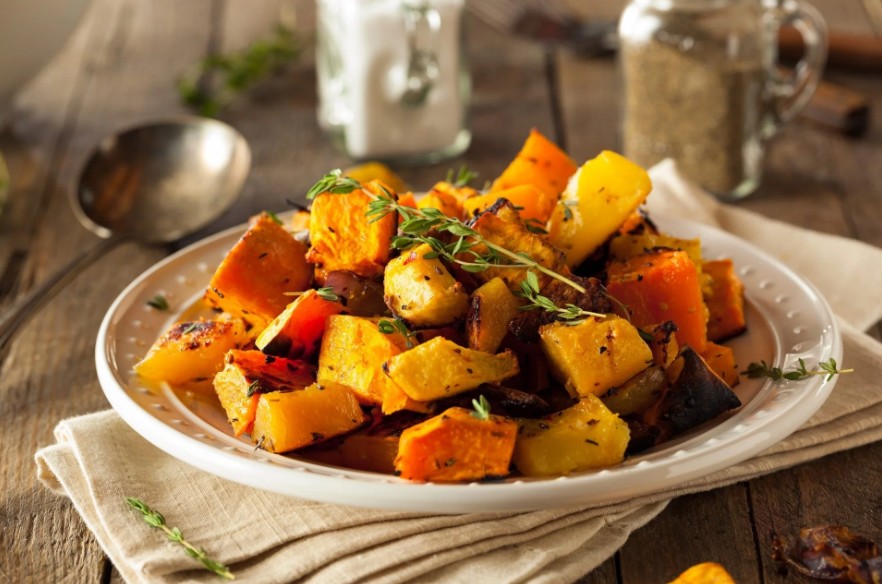
Caramelized root vegetables roasted high and fast with olive oil, garlic, and fresh herbs. The side dish that makes every protein on this site taste better. Seasonal, whole food, and endlessly adaptable.
Root vegetables feel like the language of colder months. They are the foods that wait below the surface, hidden in the ground until needed. Carrots, potatoes, onions, squash. They are sturdy, dependable, and built for a slower rhythm of cooking.
There is a kind of quiet beauty in roasting vegetables. Heat draws out sweetness. Edges darken. Interiors soften. What begins earthy becomes rich and caramelized. A tray of roasted vegetables says home in a way few things do.
Traditionally, root vegetables were survival foods as much as comfort foods. Root cellars kept them edible for months through winter, stored in the cool dark where their natural respiration slowed to a crawl. This is how humans ate vegetables in January before industrial refrigeration. You planted in spring, harvested in fall, buried the carrots in sand or sawdust, and rationed them until the next season came. The parsnip was such an important winter calorie source in medieval Europe that some historians think it was the dominant starch in peasant diets before the potato arrived from South America in the sixteenth century. The beet was first bred as a sugar crop in Prussia in the 1700s, which gave Europe its first reliable alternative to Caribbean cane sugar.
The transformation of these vegetables in the oven comes down to sugar chemistry. Raw carrots are about four percent sugar. Roasted carrots taste sweeter than that because the high heat is doing three things at once: evaporating water (which concentrates the sugar that was already there), breaking long starch chains into shorter sugars, and caramelizing the sugars on the surface. Caramelization kicks in at about 320°F. The Maillard reaction (the same one that browns steak) runs simultaneously at around 285°F and up, reacting with the small amount of protein in the vegetables. Both reactions create hundreds of new flavor compounds that did not exist in the raw vegetable. That is why a roasted carrot tastes like candy and a raw one does not.
I love this recipe because it changes with the seasons. In the fall and winter, I use carrots, parsnips, sweet potatoes, and beets. In the spring, I swap in turnips, radishes, and new potatoes. Summer brings zucchini, squash, and peppers, which roast faster but caramelize beautifully. The technique never changes. Only the vegetables do. My boys will eat roasted carrots they would never touch raw because the caramelization makes them taste like candy.
The Keys to Perfect Roasted Vegetables
Do not crowd the pan. This is the number one mistake people make. When vegetables are piled on top of each other, they steam instead of roast. You want every piece touching the pan with space between them. If you need to use two sheet pans, use two sheet pans. Crowding is how you get soggy, pale vegetables instead of golden, caramelized ones.
Cut everything the same size. If your carrots are in thick rounds and your sweet potatoes are in tiny cubes, they will cook at completely different rates. Uniformity is a professional kitchen principle that makes a massive difference at home. Aim for roughly 1 inch pieces across the board.
Use more olive oil than you think you need. The oil is doing two things: it is conducting heat to the surface of the vegetables for better browning, and it is carrying the flavor of the herbs. Be generous. This is whole food cooking, and good olive oil is one of the best fats you can eat.
Add herbs in the last 10 minutes. Fresh herbs burn at high heat. Toss them in for the final stretch so they wilt and become fragrant without turning black and bitter. The volatile oils in rosemary, thyme, and oregano are what perfume the whole pan. Treat them like a finishing ingredient, not a cooking one.
Let the first side brown before you flip. For 20 to 25 minutes after the pan goes in the oven, do not touch the vegetables. Give the underside time to develop a real crust. If you stir too early, you break the crust and start over. Patience for the first flip is the difference between golden edges and pale all around.
How to Serve It
Pile them on a platter and serve family style alongside any protein. They pair beautifully with the Slow Roasted Beef Chuck, the Braised Chicken Thighs, or the Pan Seared Salmon. For a composed plate, arrange the vegetables around the protein and drizzle the whole thing with olive oil and flaky salt. A few shavings of parmesan on top while they are still hot is a move worth making.
Leftover roasted vegetables are amazing in grain bowls, tossed into the Beef and Olive Stew, or eaten cold straight from the fridge as a snack. They keep for four to five days and reheat well in a hot oven for a few minutes.
Frequently Asked Questions
What vegetables work best?
Fall and winter: carrots, parsnips, sweet potatoes, beets, turnips, butternut squash. Spring: radishes, new potatoes, fennel, turnips. The technique is the same for all of them. Cut to uniform size and roast at high heat.
Why are my roasted vegetables soggy?
Two reasons. The pan was too crowded, or the oven was not hot enough. Use 425°F, spread the vegetables in a single layer with space between them, and do not stir them for the first 20 minutes. Let the bottoms develop a crust before you move anything.
Can I meal prep roasted vegetables?
Absolutely. Roast a double batch on Sunday and reheat portions throughout the week. They hold up much better than most cooked vegetables and actually develop more flavor after a day or two.

Roasted Root Vegetables with Olive Oil and Herbs
Ingredients
Method
- Preheat the oven to 425°F.
- Place the vegetables on a sheet pan. Toss with olive oil, salt, pepper, dried thyme, and garlic powder.
- Spread into a single layer. Roast for 30 to 40 minutes, turning once halfway through, until browned at the edges and tender throughout.
- Finish with fresh thyme before serving.
Notes
Did you make this? I want to see it. Tag @saltandstock on Instagram.
Leave a Reply