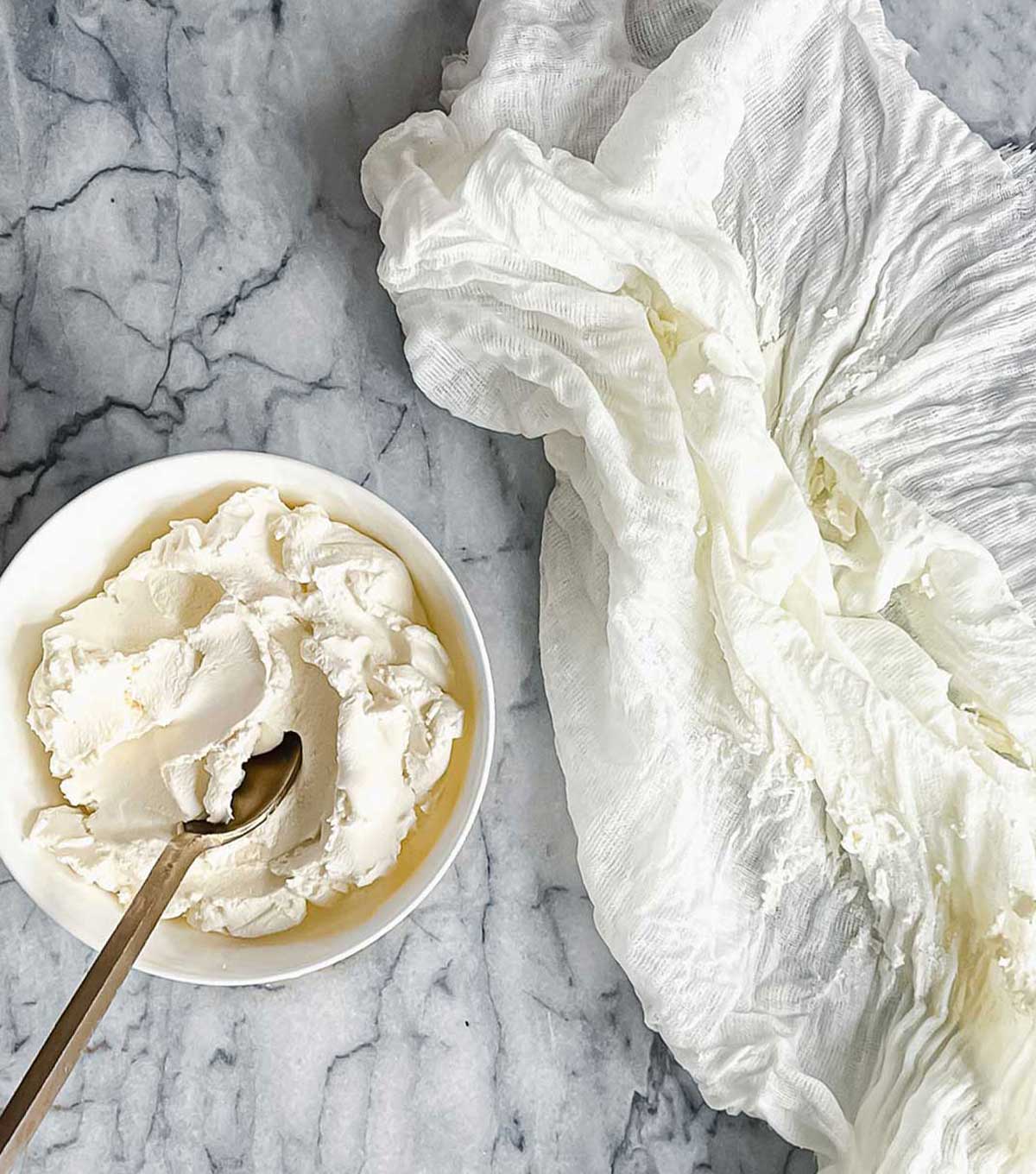
Yogurt, salt, and time. Thick, tangy, creamy labneh you strain in your own fridge overnight. One of the best things your kitchen can quietly make for itself.
There is something beautiful about turning one humble ingredient into something that feels far more special than it should. Labneh is exactly that. Just yogurt, salt, and time. Yet what comes out on the other side is thick, tangy, creamy, and deeply useful in the kitchen.
Labneh has long been part of tables across the Middle East and Mediterranean region. It is one of those foods that reflects an older way of cooking, where preservation, patience, and simplicity mattered. Straining yogurt gave it longer life, richer texture, and a new purpose. It could be spread on bread, spooned beside roasted vegetables, served with olive oil and herbs, or used as a cooling contrast to warm and spiced dishes.
The story of strained yogurt is older than most written languages. Archaeological evidence suggests yogurt itself was first produced in Mesopotamia around five thousand BC, almost certainly by accident, when raw milk left in a warm animal stomach bag or clay vessel fermented into something thicker and more digestible than fresh milk. Every culture that inherited yogurt found its own strained version. The Greeks call it straggisto. The Turks call it süzme. Iranians make mast chekideh. Indians make hung curd. Lebanese and Syrian cooks call it labneh. The principle is identical across every variation: strain the whey out of yogurt and the casein protein concentrates, the lactose drops, and the texture becomes spoonable or spreadable depending on how long you wait. This is one of the oldest food preservation techniques on earth. Before refrigeration, turning milk into yogurt and then into strained yogurt meant calories that could be eaten a week later instead of spoiling in a day.
What is actually happening during the straining is beautiful protein chemistry. Yogurt is made when lactic acid bacteria convert the lactose in milk into lactic acid. That acid lowers the pH of the milk, which causes the casein proteins to tangle into a loose network, trapping water in their structure. That is what gives yogurt its body. When you pour that yogurt into cheesecloth and hang it in the fridge, gravity pulls the water (called whey) through the cloth while the protein network holds everything else. Twelve hours in, you have a thick spoonable labneh with some whey still trapped. Twenty-four hours in, you have a spreadable cheese. Forty-eight hours in, the whey is almost entirely drained and you have a dense spread you could shape into a ball. Add salt at the start and two things happen: the flavor sharpens, and the salt actually helps the protein network hold its shape by drawing out a tiny bit more whey. That is why salted labneh is firmer than unsalted labneh at the same strain time.
There is also something fitting about a food like this in a Salt and Stock kitchen. It is not flashy. It is foundational. A reminder that some of the best things on the table do not come from complexity, but from restraint. I keep a container of this in my fridge at all times, next to the bone broth and the honey. It goes on everything. Under the Roasted Sweet Potatoes with Honey and Sea Salt over Labneh this was originally made to sit beneath. Alongside the Charred Lemon Broccolini. Spread on toast with honey and flaky salt. Dolloped into a grain bowl to add cooling fat against warm spice. It is the single most useful fermented thing you can make in your own kitchen. Yogurt and patience. That is the whole list.
What Makes Great Labneh
Use whole milk yogurt. Full fat is non negotiable. Low fat or nonfat yogurt will strain into a pasty, gummy texture because the fat is what gives labneh its mouthfeel. Greek yogurt is already partially strained, which shortens the process but requires no other trick. Plain whole milk yogurt takes longer but produces a slightly tangier, more delicate labneh.
Salt at the start, not the end. Stir the kosher salt into the yogurt before straining. The salt draws out additional whey during the strain, firming the finished product. Salting at the end gives you the same flavor but a looser texture.
Use cheesecloth or a thin kitchen towel. Paper towels will disintegrate. A thick dish towel will absorb the whey and stop draining. The fabric needs to be fine enough to hold the solids but porous enough for the whey to flow through. If you want to invest in one tool, a reusable nut milk bag does the job perfectly and lasts for years.
Save the whey. That liquid in the bowl is not waste. It is concentrated protein, lactose, and minerals. Use it in smoothies, drop it into bread dough to replace water for a more tender crumb, thin out salad dressings with it, or freeze it in ice cube trays for soup stock. Professional kitchens never throw whey away. Home cooks should not either.
How to Use It
As a spread. Smear a thick layer across a plate, drizzle with olive oil, finish with flaky salt, and scatter zaatar or fresh herbs over the top. Serve with warm pita or torn sourdough. This is basically the standard way labneh appears across the Levant.
Under roasted vegetables. This is what the Roasted Sweet Potatoes over Labneh recipe was built for. Cool labneh under warm roasted vegetables is one of the great textural moves in cooking.
On toast with honey. Labneh instead of butter on my Honey Fig Sourdough Toast changes the whole feel of the dish. Creamier, tangier, more substantial.
Rolled into balls. Strain for 48 hours, add more salt, roll into small balls, and submerge them in olive oil with herbs. They keep for a month in the fridge and make one of the best snacks I know.
Frequently Asked Questions
Can I use flavored yogurt?
No. You need plain. Flavored yogurts contain added sugars and gums that disrupt the straining process and leave you with a sweet, sticky mess.
How thick should my labneh be?
Depends on what you plan to do with it. For spreading on toast, 12 to 18 hours. For dolloping beside roasted vegetables, 24 hours. For rolling into balls, 36 to 48 hours.
My labneh tastes bland. What happened?
Not enough salt, or the yogurt was low fat. The salt brightens the tang and the fat carries the flavor. Full fat yogurt with a full teaspoon of salt per four cups is the sweet spot.
How long does homemade labneh keep?
About five days in the fridge in a sealed container. A thin layer of olive oil on top helps extend that to a week. For longer storage, roll into balls and submerge in oil with herbs, which keeps for up to a month.

Labneh from Scratch
Ingredients
Method
- Stir the yogurt with the salt in a bowl.
- Line a fine mesh strainer with cheesecloth or a clean kitchen towel. Set over a bowl. Spoon the yogurt in.
- Gather the cloth gently and refrigerate 12 to 24 hours depending on desired thickness.
- Transfer to a container. Drizzle with olive oil if desired.
- Stir the yogurt with the salt.
- Strain for 24 to 48 hours in a lined strainer over a bowl in the fridge, until thick and spreadable.
Notes
Did you make this? I want to see it. Tag @saltandstock on Instagram.
Leave a Reply